Blindleistungskompensationsanlage — what it means and what it does
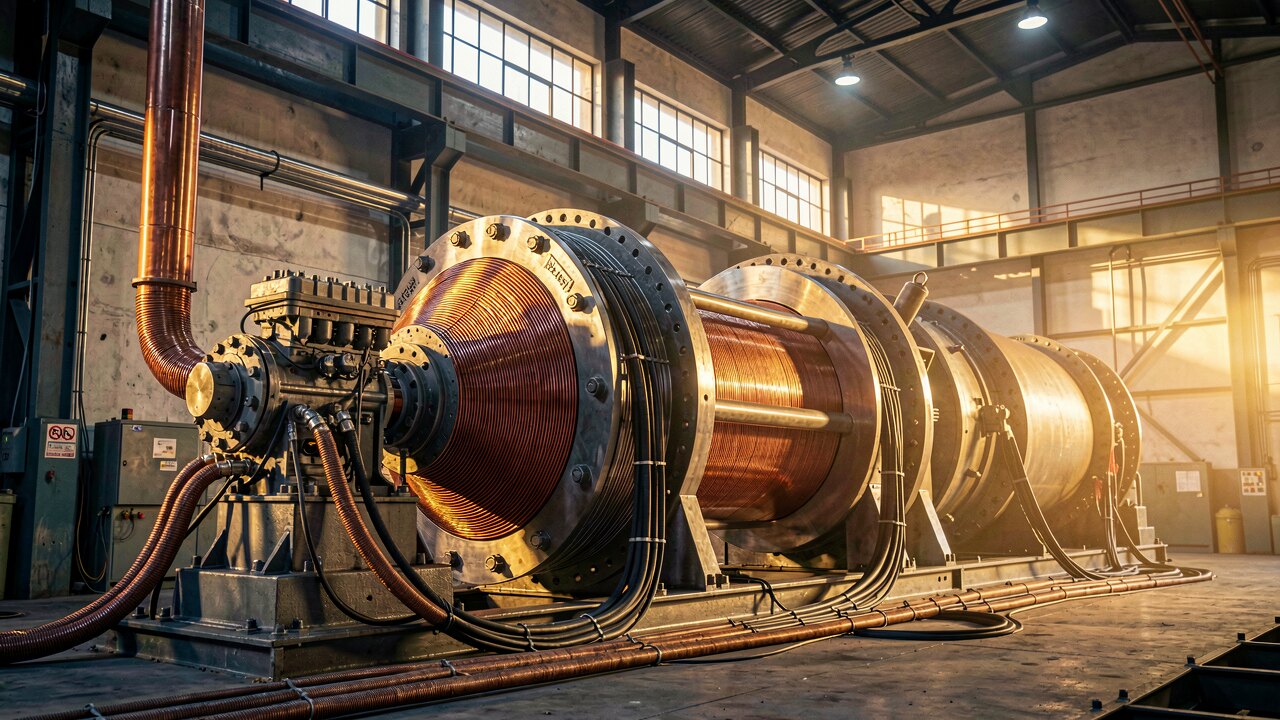
A Blindleistungskompensationsanlage is the German term for a reactive power compensation unit: equipment installed at your site that supplies reactive power locally instead of drawing it from the grid. It exists because inductive loads like motors, transformers and variable-frequency drives pull reactive power that loads your cables and transformer without doing any useful work — and many businesses pay a reactive power charge on their electricity bill without realising it.
Blindleistung = reactive power. Kompensation = compensation. Anlage = installation or plant. Put together, "Blindleistungskompensationsanlage" is a single German compound noun meaning "reactive power compensation system". In English catalogues you will find the same equipment sold as a power factor correction (PFC) system or a capacitor bank. If a German supplier, utility or grid operator uses this word, they mean hardware — a cabinet on your site, not a tariff or a service.
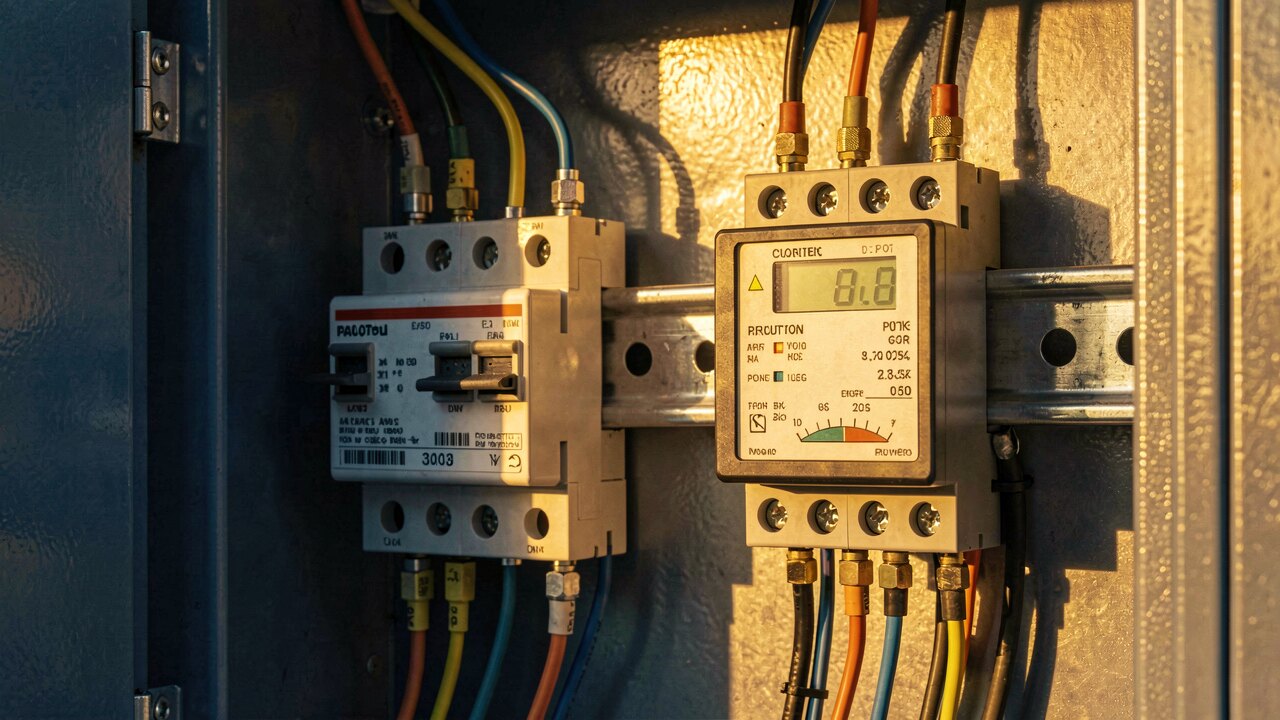
Inductive loads draw a current that lags behind the voltage. That lag is what shows up as reactive power. A compensation unit connects capacitors — which draw a leading current — at or near your connection point, so the leading and lagging components cancel each other out locally. The reactive power then circulates between your capacitors and your motors instead of travelling back and forth from the utility's network. Your active power consumption does not change; what changes is the current your supply cable and transformer have to carry, and the power factor (cos φ) the meter records.

Start with your electricity bill, not with a supplier. Look for a line item covering reactive energy — in German bills typically labelled Blindarbeit or Blindleistung, billed in kvarh. If you are being charged for it, you are already paying for something a compensation unit is designed to remove. The second check is a proper measurement at the connection point: you need to know your actual cos φ, when it is worst during the working day, and whether the load is steady or swings with production. A supplier who sizes an installation without that measurement is guessing.
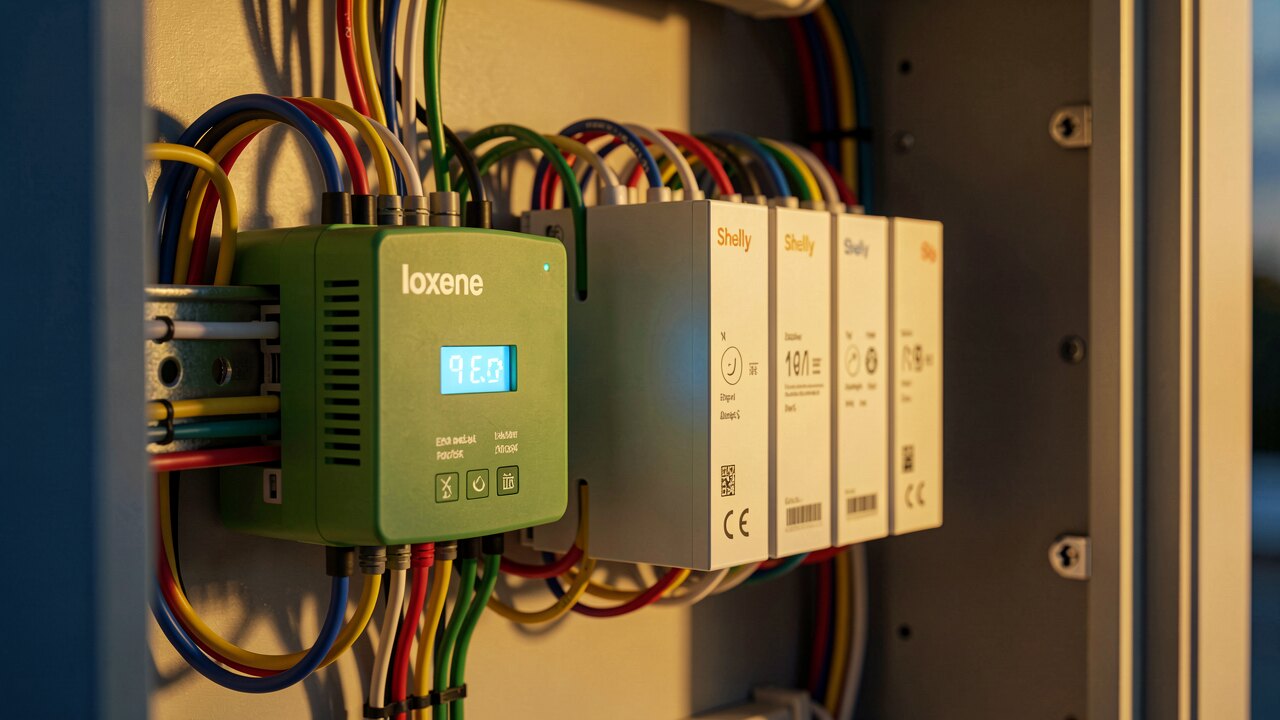
Fixed compensation means capacitors permanently connected, usually right at a single large motor or transformer that runs continuously. Automatic (stepped) compensation uses a controller that switches capacitor stages in and out to track a changing load — this is the common cabinet in industrial and commercial buildings. Active compensation (an active filter) uses power electronics and responds fast enough for loads that fluctuate rapidly; it also handles harmonics, which plain capacitors do not. The choice follows the load profile you measured, not the price list.
This is the failure mode worth knowing before you buy. Sites with a lot of variable-frequency drives, rectifiers or switched-mode power supplies carry harmonic currents. Capacitors have a falling impedance at higher frequencies, so a plain capacitor bank on such a site can attract harmonic current and, in the wrong combination with the transformer's inductance, form a resonant circuit — capacitors overheat and fail early. The standard answer is detuned (reactor-connected) capacitor stages, or an active filter. Any competent supplier will ask about your drive population before quoting.
If you run your own generation — a CHP unit, for example — reactive power is managed at the generator itself rather than by a capacitor bank. For grid feed-in, cos φ is typically in the range of 0.9 to 1.0, and the automatic voltage regulator (AVR) adjusts the excitation to hold it. The consequence is the same as on the consumption side: a poor power factor loads the distribution network and can result in grid charges. So a site with both large motors and its own generator has two separate levers, and they need to be looked at together.