Electricity Price Forecast: What It Predicts and How Far Ahead
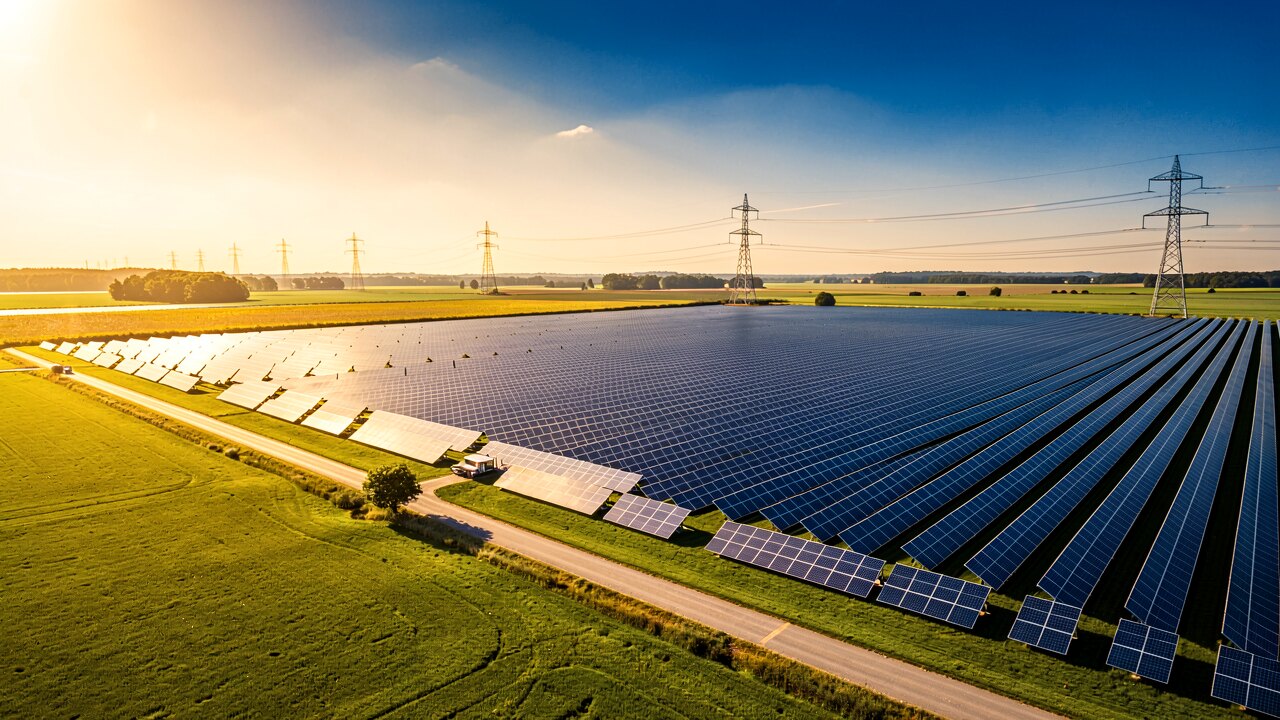
An electricity price forecast estimates future wholesale power prices — typically hourly day-ahead prices in €/MWh on the EPEX Spot market. Stromfee publishes a 7-day hourly forecast generated with Prophet, a time-series model, for DE, AT, FR, ES, NL, BE, PL, DK1, SE3 and NO1.
For each hour of the coming days you get a modelled price in €/MWh, plus the derived figures that matter in practice: average price, cheapest hour, most expensive hour, and the spread between them. Stromfee's forecast page shows these for the next 7 days at hourly resolution, alongside a daily overview of minimum, average and maximum price per day and the number of hours expected to go negative.
The forecast is a statistical time-series model (Prophet) trained on historical day-ahead prices. It learns the repeating structure in the data — the daily shape (cheap at night and around midday solar peak, expensive in the morning and evening ramps), the weekly rhythm (weekends lower than working days), and the seasonal drift — and projects that structure forward. It does not read the news or model plant outages; anything outside the historical pattern is not in the model.
Reliability drops sharply with horizon. Day-ahead prices for tomorrow are effectively settled by the EPEX Spot auction and are known, not forecast. A statistical forecast for day 2 or 3 is usually directionally sound on the shape of the curve. By day 6 or 7, treat the level as indicative only — wind forecasts, weather and outages dominate at that range and a pattern model cannot see them. Use the forecast to plan when to act, not to lock in an exact price.

Wholesale prices are set by the marginal generator. Strong wind and solar push prices down and can drive them below zero when must-run generation exceeds demand; low renewables plus high demand pull gas plants into the merit order and raise the price. That is why the biggest forecast errors track weather forecast errors, and why negative-price hours cluster on sunny or windy low-demand days.
The usable output is the spread, not the level. If you can shift consumption — charging, pumping, heating, production scheduling — move it into the forecast cheap hours and away from the evening peak. If you operate a battery, the daily spread tells you whether a charge-discharge cycle pays after round-trip losses; Stromfee's page models this against a 10 MWh reference storage at 90% efficiency and shows the resulting charge hour, discharge hour, spread and profit signal per day.
If you are on a fixed tariff, the forecast is background information — your price does not move with the market. It becomes actionable if you buy on the spot market, hold a dynamic tariff, or run flexible load or storage. In Germany, all electricity suppliers are required to offer dynamic tariffs from 2025, which widens the group of consumers for whom hourly price forecasts are worth watching.