How to Integrate Dynamic Electricity Tariffs into Loxone

Yes — a Loxone Miniserver can control your home based on live spot prices. You feed it the hourly day-ahead price, set a threshold, and it switches high-consumption loads to the cheapest hours by itself.
You need three things: (1) a source of hourly spot prices as a live data feed, (2) a Virtual HTTP Input in the Loxone Miniserver that pulls and parses that price, and (3) logic that switches your loads when the price drops below a threshold you define. No extra hardware is required beyond the Miniserver you already have.

In Loxone Config, create a Virtual HTTP Input pointing at a JSON price feed (for example a live spot-price API). Set a polling interval of a few minutes and use a command recognition string to extract the current €/kWh value. The Miniserver now holds the live price as a usable analog value you can reference anywhere in your program.

Compare the live price against a threshold using a Logic or Analog Memory block. When the price falls below your limit, the block outputs 'on' and triggers a digital output. Add a hysteresis or minimum-runtime so loads don't chatter on and off around the threshold. You can also rank the cheapest hours of the day and only run during those windows.
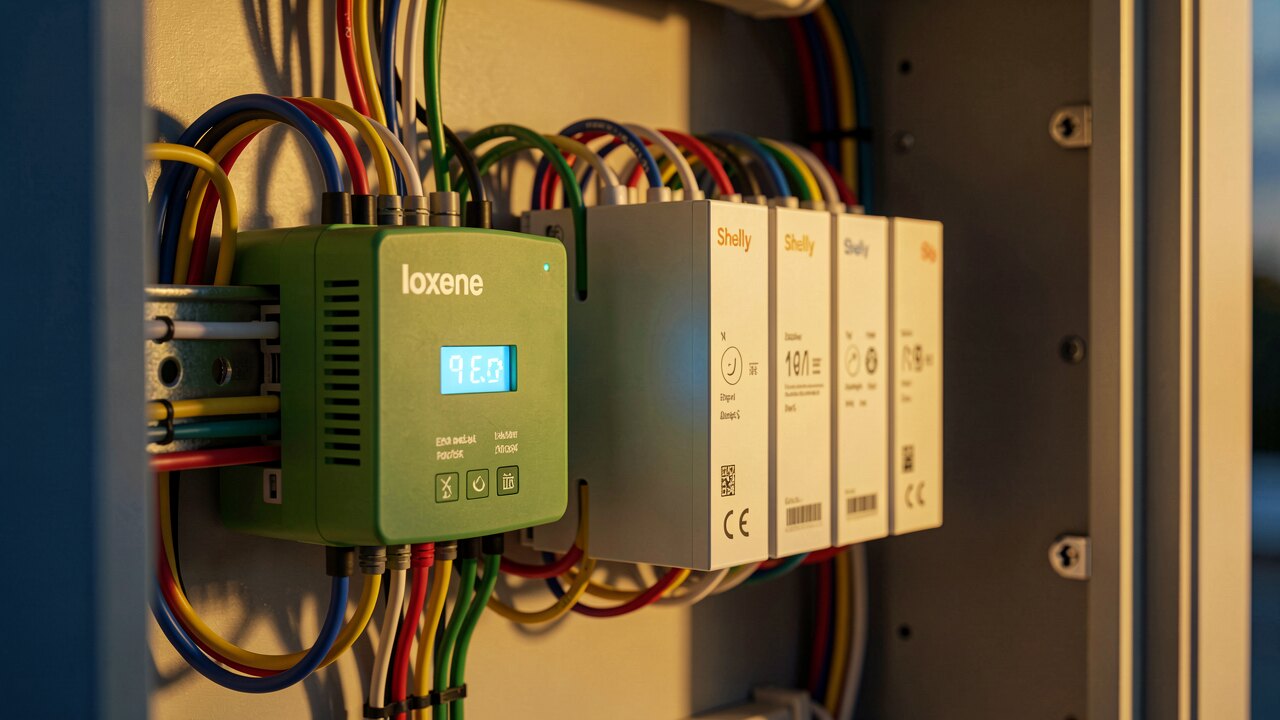
Point the switching output at flexible, time-tolerant loads: hot-water heating, heat pump / underfloor heating, pool and circulation pumps, EV wallbox charging, and battery charging. Comfort-critical loads (lighting, ventilation) stay untouched. The bigger and more shiftable the load, the more a dynamic tariff pays off.
A battery storage system multiplies the benefit: Loxone charges it during the cheapest hours and discharges it when prices peak, so even loads you can't time-shift run on cheap stored energy. The Miniserver coordinates charge/discharge windows against the same price signal that controls your other loads.
Trend-log the price value and the switching outputs in Loxone so you can see loads actually running in the low-price windows. Check over a few days that thresholds are realistic for current market prices and adjust the limit or the number of cheap hours until consumption clearly clusters where electricity is cheapest.