Price Development of Photovoltaic Systems: The Long-Term Trend
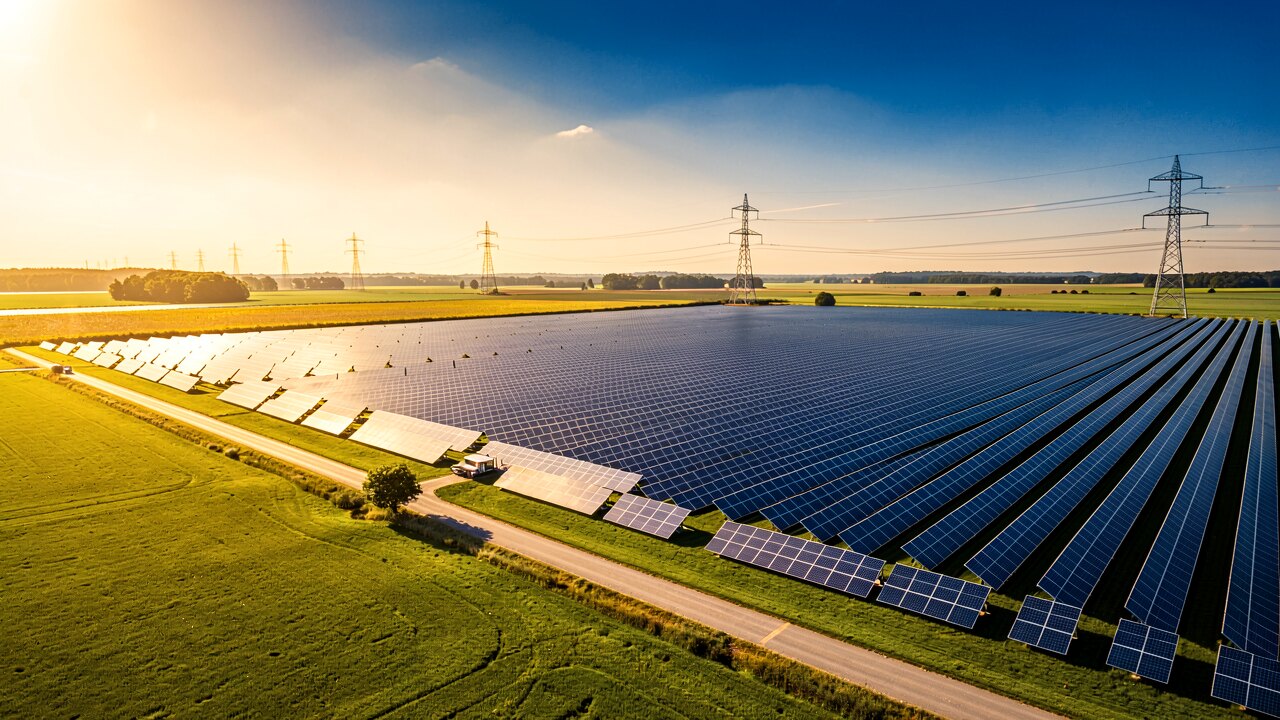
The short answer: solar module prices have fallen sharply over the past decades, while total system prices have dropped more slowly because installation, inverter and mounting costs now make up a large share. Here is how the price of a photovoltaic system has developed, why, and what to watch before you buy.
Over the long run, PV has become far cheaper. Widely reported industry data (e.g. IRENA, IEA) shows that solar module and utility-scale generation costs fell by roughly 80-90% between 2010 and 2020. But the curve is not a straight line: raw-material, energy and shipping costs pushed prices temporarily up in 2021-2022, then a global module oversupply pulled them down again in 2023-2024. So the decades-long direction is clearly downward, while any single year can move either way.
The main driver is scale. A rule of thumb known as Swanson's law describes how solar module cost falls by roughly 20% for every doubling of cumulative production. Mass manufacturing, higher cell efficiency, thinner wafers, automated production and global competition all compounded over 15+ years. The result: modules that once dominated a system's cost are now only one part of the total price.
For a modern rooftop system, the panels themselves are no longer the biggest cost block. A large share now goes to the inverter, mounting hardware, cabling, installation labour, planning, permits and (increasingly) an optional battery. This matters for the price trend: even when module prices keep falling, these 'balance-of-system' and labour costs fall much more slowly, so total system prices per kWp decline gently rather than collapsing.
After a supply-chain spike in 2021-2022, module prices dropped again as manufacturing capacity outran demand, leaving distributors with high stock in 2023-2024. Installation and labour costs, however, stayed comparatively firm. Net effect for a typical buyer: hardware got cheaper, but the installed price fell less than the panel price alone, because skilled-labour and soft costs held up.
Most forecasts expect module costs to keep drifting lower over the long term as production scales further, though at a slower pace than the dramatic 2010s decline. Battery-storage prices are also on a downward path. Treat these as projections, not promises: policy changes, tariffs, energy prices and demand swings can reverse a given year. Nobody can reliably guarantee a specific future price.
Do not wait indefinitely for a much lower price. Because soft and labour costs now dominate, big further drops in the installed price are unlikely to come quickly, and every year you wait is a year without self-generated electricity savings. Focus instead on getting several comparable quotes for the same system size and quality, and on system yield and self-consumption, which usually affect your economics more than a small hardware-price change.