PV system price development: what has actually changed
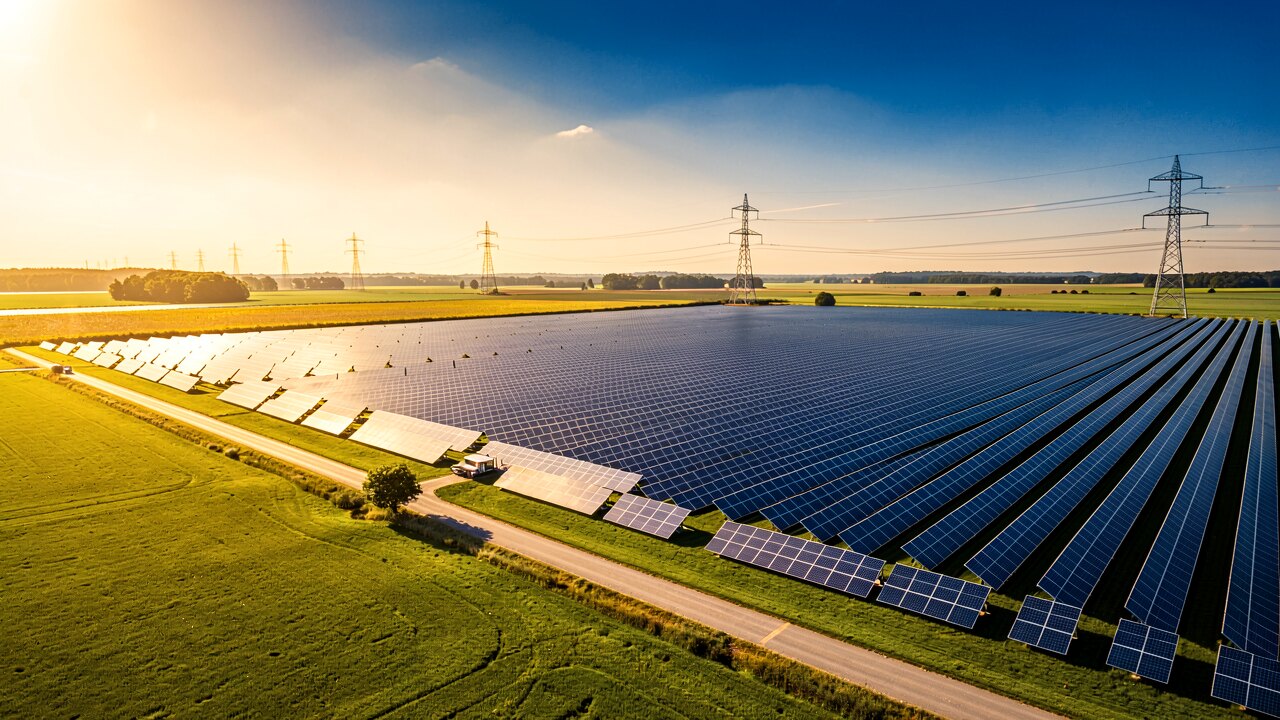
Solar module prices have fallen steeply over the past decade and, since the global manufacturing oversupply that began in 2023, they have sat at historically low levels in Europe. Turnkey system prices followed the same direction but by much less, because modules are only one line on the invoice.
Two different price curves are often confused. The first is the module price per watt, which has dropped over decades along the classic learning curve and dropped again sharply from 2023 onwards as global cell and module manufacturing capacity outran demand. The second is the installed price of a finished system in €/kWp, which also declined but on a flatter curve. If you compare a quote you received a few years ago with one today, expect a difference — but not one that mirrors the module headlines.
A turnkey quote bundles modules, inverter, mounting rails and roof hooks, DC and AC cabling, meter cabinet work, scaffolding, installer and electrician hours, planning, documentation and the grid connection process. A change in module prices moves the total only in proportion to the module share of that total; every other item is unaffected. So the same percentage drop in module prices produces a smaller percentage drop in the final price — and if wages, scaffolding or electrical materials rise at the same time, the two effects can partly cancel out. This is the single most common reason people feel that 'panels got cheap but my quote didn't'.
On the downward side: module and cell oversupply, larger and higher-efficiency panels that deliver more kWp per installed square metre and per mounting hour, cheaper battery cells, and mature installer competition in dense markets. On the upward side: skilled labour scarcity, which sets the price of the man-hours in the quote, and the growing share of electrical work in modern installations (storage, wallbox, meter cabinet upgrades, control and metering equipment). In Germany, the 0% VAT rate on the supply and installation of residential PV systems, in force since 1 January 2023, also lowered what private buyers actually pay without lowering the underlying cost of anything.
Reduce every offer to a single comparable figure: the total price divided by the installed DC capacity, in €/kWp, stated clearly as with or without VAT. Then note what is inside that figure — battery storage, a wallbox, an inverter replacement, scaffolding, a meter cabinet upgrade, roof repairs — because a system with storage and a system without storage are not comparable per kWp at all. Small rooftop systems are almost always more expensive per kWp than large ones, since planning, scaffolding and travel are largely fixed costs spread over fewer kilowatts. If you want current market levels rather than an estimate, collect three quotes for the same scope; that is the only price signal that reflects your roof, your region and today's installer order books.
Waiting has a cost on both sides of the equation. Hardware may become somewhat cheaper, but in Germany the statutory feed-in tariff for new systems degresses on a regular schedule, so a system commissioned later typically earns a lower guaranteed rate per kilowatt-hour for its entire 20-year term. On top of that, every month without a system is a month of buying full-price grid electricity instead of self-consumed solar. Since installed prices are now moving in small steps rather than large ones, the calculation usually turns on your self-consumption share, not on a forecast of next year's module price.
As solar capacity grows across Europe, midday market prices fall, and hours with zero or negative wholesale prices have moved from a statistical curiosity to a structural feature of several markets — the Netherlands and Finland are clear examples. That changes the economics: what a system earns depends increasingly on when its output is used or stored, not only on what it cost to build. Practically, this raises the weight of self-consumption, load shifting, battery storage and sensible inverter control in the business case, and it is why a purchase decision based only on €/kWp is now an incomplete one.